

Commercial property sweeping frequency should be based on how quickly a site produces debris—not on a one-size-fits-all calendar. In the Washington, D.C. metro area, a property’s ideal schedule depends on vehicle and foot traffic, tenant mix, operating hours, surrounding trees, drainage, and seasonal conditions. A quiet office park may look well maintained with weekly service, while a busy shopping center may need sweeping every night.
After decades of serving commercial properties across the DMV, Atlantic Sweeping & Cleaning has found that the best schedule is frequent enough to remove litter, grit, leaves, and operational debris before they affect customers, storm drains, pavement, or tenant satisfaction.
Recommended Commercial Property Sweeping Frequency
The following ranges are practical starting points. A site inspection should determine the final schedule.
| Property type | Recommended frequency | Why |
|---|---|---|
| Shopping centers and malls | Daily to 3–5 times per week | High customer turnover, food packaging, cart debris, and demanding curb-appeal standards |
| Office parks | 1–2 times per week | Moderate, predictable traffic with an emphasis on a professional appearance |
| Apartment communities and HOAs | Weekly to every other week | Routine cleaning helps control litter, pests, and the appearance of common areas |
| Warehouses and industrial sites | Weekly to every other week | Truck traffic, pallet and packaging debris, loose aggregate, and dust require regular attention |
| Construction sites | 2–3 times per week or daily | Tracked-out soil, heavy dust, nails, aggregate, and environmental requirements can make frequent sweeping essential |
These ranges are not rigid rules. Even within one shopping center, the front retail lane may need service several times per week while a low-use rear access road needs only one pass. A zone-based plan can protect the property without paying for unnecessary service.
Why DMV Properties Need Seasonal Commercial Property Sweeping Adjustments
The Mid-Atlantic’s changing seasons make a static annual schedule unreliable. In autumn, mature deciduous trees can cover curb lines and storm drains within days. Pine needles create a separate year-round drainage concern. Winter treatment leaves salt and sand across parking areas; once the weather improves, that abrasive material should not remain on asphalt longer than necessary. Spring storms can move litter, silt, and landscape mulch into catch basins, while summer events and increased customer traffic may create short-term surges in debris.
Atlantic Sweeping generally recommends establishing a normal baseline and increasing commercial property sweeping service temporarily during leaf season, after snow and ice operations, following severe storms, during construction, or around special events. The right question is not simply, “How often did we sweep last year?” It is, “How quickly is debris accumulating on this property right now?”
Signs Your Current Commercial Property Sweeping Schedule Is Not Frequent Enough
Property managers can often spot a failing schedule before complaints arrive. Watch for:
- Sand and grit forming wedges along curbs, corners, and wheel stops
- Litter migrating from food tenants or dumpster areas into landscaping and walkways
- Leaves, trash, or organic material bridging over storm-drain grates
- Fine dirt being tracked through building entrances
- Debris “shadows” accumulating beneath vehicles that are present during service
- Loose gravel at pedestrian crossings or other slip-and-trip concerns
- Striping and sealcoating wearing faster where abrasive grit remains on the pavement
- A lot that looks clean just after service but visibly neglected several days before the next visit
Our operators also look for packed curb-line material that requires repeated passes, overloaded landscape transitions, and debris already entering catch basins. Those conditions usually mean the service interval, timing, or equipment plan needs to change.
A Retail Plaza Lesson: Infrequent Sweeping Can Cost More
Atlantic Sweeping has encountered commercial retail properties that reduced sweeping to every other week in an effort to lower operating costs. At one client’s plaza with a grocery anchor, fast-food tenants, and mature trees, that interval could not keep pace with the debris load.
Leaves, food packaging, and silt accumulated between visits and moved toward the drainage system. Standing water began appearing in driving lanes after heavy rain. Loose grit remained under traffic, food waste contributed to pest concerns, and gravel collected near customer walking routes. The apparent savings from fewer sweeps were offset by drainage work, pavement concerns, and a poorer customer experience.
The property moved to three commercial property sweeping service visits per week and added nightly service during the heaviest autumn leaf drop. Removing debris before it reached the drains improved water flow, reduced visible litter, and helped the property team address pavement and safety concerns proactively. The lesson is straightforward: power sweeping is preventive maintenance, not merely cosmetic cleaning.
What We Evaluate Before Recommending a Commercial Property Sweeping Schedule
A quote based only on square footage overlooks the conditions that determine how much commercial property sweeping service a property actually requires. Before recommending a commercial property sweeping plan, our team evaluates:
- Traffic and tenant mix: Grocery stores, restaurants, medical offices, loading docks, and high-volume retailers produce very different debris patterns.
- Operating hours: Sweeping works best during low-occupancy “dark hours,” when parked vehicles do not block curb lines.
- Trees and landscaping: Leaf volume, pine needles, mulch movement, and low branches affect frequency and equipment access.
- Drainage: Catch-basin locations, low spots, and runoff paths identify areas where debris interception matters most.
- Layout and pavement: Tight corners, speed bumps, dumpster enclosures, damaged pavement, and delivery lanes influence the equipment and labor required.
- Neighbors and local requirements: Residential proximity, noise limits, stormwater obligations, and site-specific rules affect service timing.
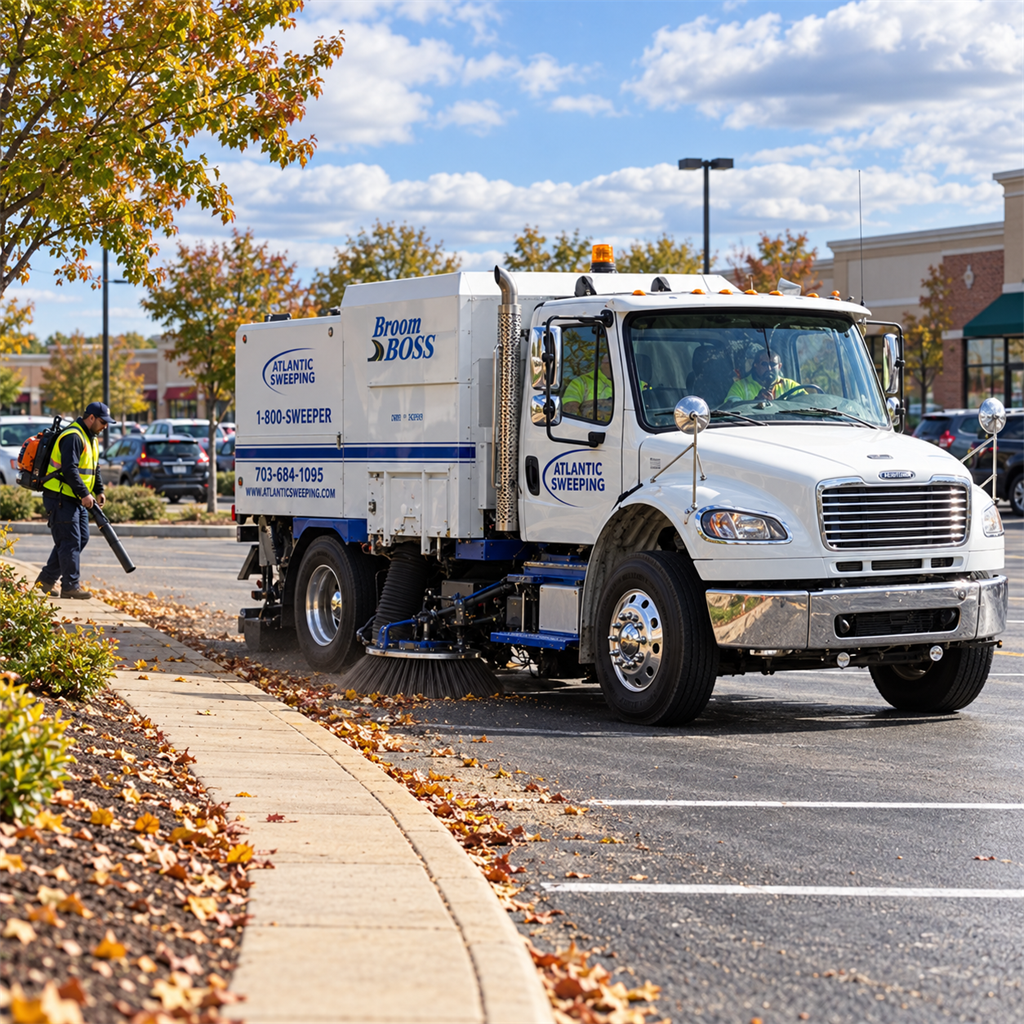
For parking lots, Atlantic Sweeping’s two-person approach pairs the sweeper operator with a helper who can use a backpack blower to move debris from sidewalks, planters, corners, and other places the truck cannot reach. Our GPS-tracked fleet and field documentation also provide accountability while helping property teams identify illegal dumping, vandalism, or damage discovered during service.
The Lowest-Cost Plan Is Usually a Targeted Plan
The most common budgeting mistake is cutting the entire property to the same minimal commercial property sweeping schedule. A better approach is to concentrate commercial property sweeping service where debris accumulates fastest. Entrances, restaurant rows, loading zones, dumpster areas, and main driving lanes may require frequent attention, while remote areas can remain on a lighter cycle. Seasonal increases can then be added only when conditions justify them.
This creates a practical balance: the property stays presentable and safer, drains are protected, and the maintenance budget is directed toward the areas of highest need. The schedule should also be reviewed periodically instead of being left unchanged for years.
Get a Sweeping Assessment for Your DMV Property
Atlantic Sweeping & Cleaning, Inc. has served the Washington, D.C. and Baltimore metro areas since 1977. Our equipment options include mechanical broom, regenerative-air, and vacuum sweepers, allowing us to match the machine and service plan to the property rather than forcing every site into the same solution. We also support broader exterior maintenance needs, including porter service, line striping, asphalt and concrete repair, traffic control, snow removal, and water-truck service.
Unsure whether your commercial property sweeping frequency is too high, too low, or simply mistimed? Reach out to our team for a sweeping assessment today. We will review your traffic, debris sources, seasonal exposure, access, and drainage concerns, then recommend a schedule designed for the way your DMV property actually operates.